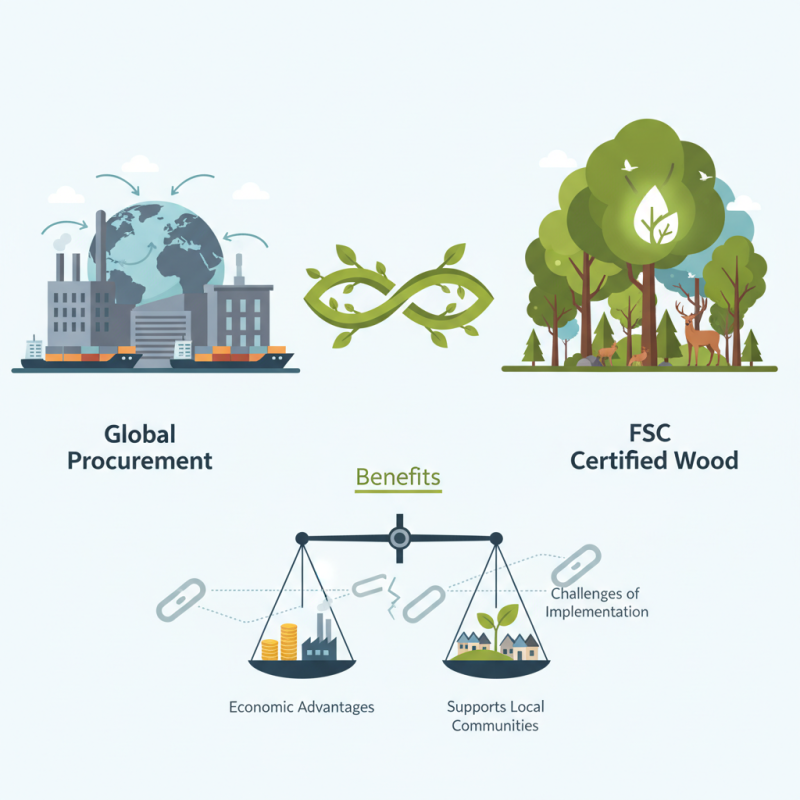
In recent years, the demand for sustainable materials has surged, particularly in the construction and furniture industries. This shift is largely due to increasing awareness about environmental conservation and climate change. One significant initiative is the Forest Stewardship Council (FSC), which certifies wood products as sustainably sourced. The question arises: "What are the benefits of using FSC-certified wood?"
According to a report by the World Wildlife Fund, FSC certification promotes responsible forest management that protects biodiversity and supports local communities. Industry expert Dr. Jane Smith highlights the value of such practices: "Using FSC-certified wood not only ensures quality but also strengthens the market for eco-friendly products." This statement reinforces the economic advantages of choosing wood that meets FSC standards.
However, it's crucial to reflect on the challenges of implementation. Not all purchasers prioritize certification, leading to a gap in sustainable practices. Additionally, the certification process can be complex and costly for smaller businesses. Recognizing these hurdles is essential for fully understanding the broader impact of FSC certification on global procurement.
FSC certification stands for Forest Stewardship Council certification. It ensures that wood products come from responsibly managed forests. These forests are environmentally sound, socially beneficial, and economically viable. According to the FSC, about 10% of the world's forests are certified, promoting sustainable practices globally. This indicates a growing awareness of environmental issues.
Sourcing FSC certified wood offers various benefits for global procurement. It supports biodiversity and mitigates deforestation. Additionally, businesses can demonstrate corporate social responsibility, which appeals to eco-conscious consumers. A study revealed that certified products often command higher prices. This can lead to increased revenue for suppliers while maintaining ethical practices.
Tip: Always ask suppliers for FSC certification documentation. This ensures transparency and accountability in the supply chain.
Choosing FSC certified wood enhances brand credibility. However, not all certified wood guarantees quality. It's vital to evaluate suppliers carefully. A proactive approach may involve site visits or audits to ensure compliance with FSC standards. Engaging in this process can uncover lapses that require resolution.
FSC certified wood plays a crucial role in sustainable procurement. According to the Forest Stewardship Council, it ensures that the wood comes from responsibly managed forests. This certification helps combat deforestation, promoting biodiversity and reducing carbon emissions.
Using FSC certified wood can lead to significant environmental benefits. Research shows that sustainably managed forests can store up to 40% more carbon than those that are not certified. This is essential in the fight against climate change. Additionally, purchasing this wood supports forest ecosystems, which are home to countless species. It can help maintain the balance of local wildlife, further promoting environmental health.
However, there are challenges in the global market. Ensuring the availability and affordability of FSC certified wood can be difficult. Not all regions have equal access to these resources. It also raises questions about the certification process itself. Transparency in sourcing is critical to maintain trust. As procurement professionals, we need to remain vigilant about these issues to truly harness the benefits of FSC certified wood.
This chart illustrates the various environmental benefits associated with the use of FSC certified wood in global procurement, highlighting important factors such as reduced deforestation and enhanced biodiversity.
Sourcing FSC certified wood globally presents significant economic benefits. Companies that engage in this practice often experience enhanced brand reputation. Consumers increasingly prefer sustainable products. By using FSC certified wood, businesses signal their commitment to environmental stewardship.
The availability of FSC certified wood can lead to competitive pricing. As demand rises, suppliers may offer discounts for bulk purchases. This can make it more affordable for companies to incorporate sustainable materials. However, sourcing globally can introduce challenges. Variability in quality and availability may arise. Companies must adapt and find reliable suppliers.
Investing in FSC certified wood can also mitigate risks. Sustainable practices reduce the chances of legal issues related to deforestation. While these advantages are clear, the initial costs can be a barrier. Companies might hesitate to invest without understanding long-term benefits. Creating a balanced approach to procurement is essential.
| Dimension | Data |
|---|---|
| Economic Growth Potential | Estimated 5% increase in local economy |
| Job Creation | Over 1 million jobs created worldwide |
| Sustainability Certification | FSC certified products increase by 15% annually |
| Market Demand | Rising consumer preference for sustainable wood |
| ROI on FSC Certification | Average return on investment of 20% for businesses |
| Export Opportunities | Access to global markets with higher acceptance rates |
FSC certified wood plays a crucial role in promoting social responsibility and ethical sourcing. The Forest Stewardship Council (FSC) sets strict guidelines for sustainable forest management. This helps reduce deforestation and promotes biodiversity. According to a 2022 report by the World Wildlife Fund, 80% of global forests are logged unsustainably. FSC certification ensures that wood comes from responsibly managed forests.
Incorporating FSC certified wood into procurement strategies not only bolsters a company's reputation but also enhances consumer trust. Sustainable sourcing is becoming increasingly important to consumers. Research shows that 73% of millennials are willing to pay more for sustainable products. This highlights the strong market demand for ethically sourced materials. Companies often face challenges in ensuring their supply chains are genuinely sustainable. Transparency in sourcing processes is vital but can be challenging to achieve.
The impact of ethical sourcing extends beyond just the environment. It also supports the welfare of communities dependent on forest resources. Access to fair wages and safe working conditions is a critical aspect of FSC standards. However, monitoring compliance can be challenging. Continuous improvement in verification processes is necessary to uphold the integrity of the certification. As interest in sustainability grows, so does the need for responsible procurement practices that address social issues within the supply chain.
FSC certified wood plays a crucial role in sustainable supply chains. According to the Forest Stewardship Council, approximately 15% of the world’s forests are FSC-certified. This certification ensures responsible management of forest resources. It promotes ecological conservation and supports local communities.
Using FSC certified wood can boost a company's reputation. In a recent study, 78% of consumers indicated that sustainability influences their purchasing decisions. Brands with certified products often see an increase in customer loyalty. However, sourcing certified wood can be challenging. Not all suppliers may have FSC certification. This situation requires companies to invest time in due diligence.
: FSC certification ensures that wood products come from responsibly managed forests. These forests benefit the environment and society.
It promotes sustainable practices and addresses deforestation. Certified wood supports biodiversity and responsible resource management.
It enhances corporate social responsibility and appeals to eco-conscious consumers. Certified products often achieve higher prices.
Always request FSC certification documentation from suppliers. This promotes transparency and accountability in your supply chain.
Not all certified wood guarantees quality. Evaluate suppliers through site visits or audits for compliance with FSC standards.
Studies show that 78% of consumers consider sustainability when purchasing. Brands with certified products may gain increased customer loyalty.
Not all suppliers have FSC certification, which complicates sourcing. Companies must invest time in due diligence to find compliant suppliers.
Always check certificates and supplier practices. Ensure your sourcing decisions align with broader sustainability goals.
Sustainable supply chains can enhance resilience and environmental outcomes. Transparency is crucial for ongoing success in operations.
The article "Benefits of FSC Certified Wood for Global Procurement" explores the essential aspects of FSC certification and its significance in the timber industry. It begins by clarifying what FSC certification is, highlighting its role in promoting responsible forest management. The environmental benefits of using FSC-certified wood are significant, as such wood sourcing helps preserve biodiversity, reduce deforestation, and promote sustainable forestry practices.
Additionally, the economic advantages are considerable; companies that source FSC-certified wood often experience better market access and consumer trust, leading to long-term profitability. On the social front, FSC certification emphasizes ethical sourcing, ensuring fair labor practices and community benefits. Ultimately, the impact of FSC-certified wood on sustainable supply chains cannot be overstated, offering a holistic approach to procurement that prioritizes environmental, economic, and social responsibility. So, what are the benefits of using FSC-certified wood? It contributes positively across these dimensions, making it a valuable choice for global procurement strategies.

TayLord Furniture