2026 Best Ways to Repurpose Old Wooden Crafts as Decor?

Time:2026-09-12 Author:Aria
0%

Old wooden crafts often carry more character than polished, factory-made accessories. A scratched tray, loose-spindled chair, or faded picture frame can become a shelf, plant stand, mirror border, or wall-mounted organizer. The important question is not only, “How to repurpose old wooden crafts into home decor?” It is also, “Will this transformation respect the wood’s history?”

William Morris, the influential British designer and leader of the Arts and Crafts movement, offered a useful principle: “Have nothing in your houses that you do not know to be useful, or believe to be beautiful.” His words still guide thoughtful decorating. A weathered stool can support a ceramic vase near a sunny window. An unused crate can hold folded blankets, with its original knots and dents left visible. Small marks often provide the strongest visual story.

Begin with a careful inspection. Check for rot, insects, unstable joints, and peeling finishes before sanding or painting. Clean gently, repair weak areas, and choose low-odor products for indoor projects. Not every piece deserves saving. Some experiments fail. That is part of the process.

This 2026 guide explores practical ways to combine function, texture, and personal memory. It also considers proportion, room lighting, and safe placement. A beautiful object can still become clutter if it lacks purpose. The best results feel useful first, decorative second, and genuinely connected to the home.
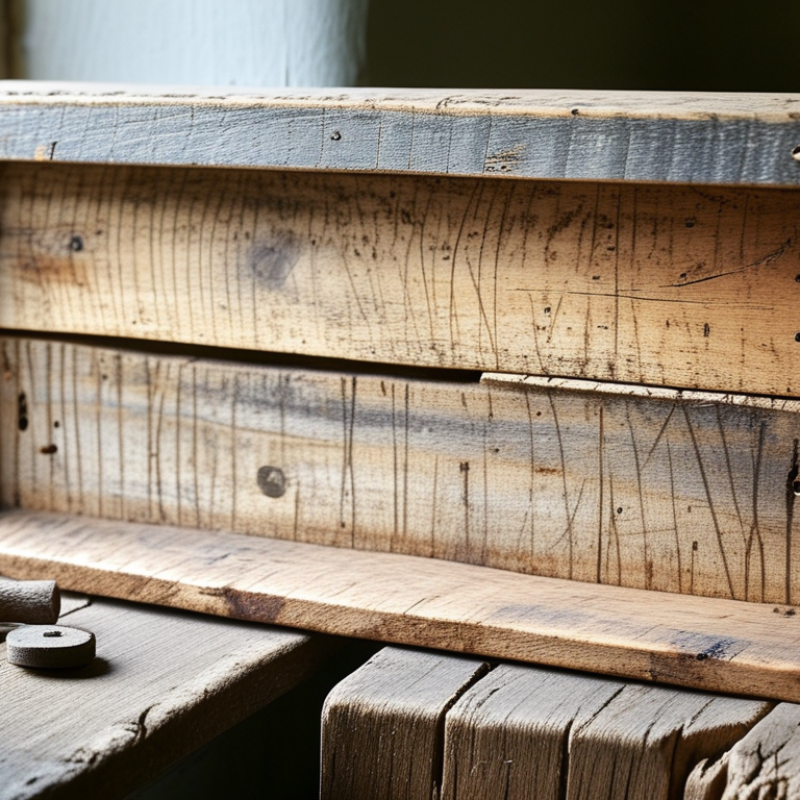
2026 Best Ways to Repurpose Old Wooden Crafts as Decor?

Assessing Old Wooden Crafts for Safe and Creative Repurposing

Old wooden crafts need a safety assessment before they become attractive decor. The U.S. Environmental Protection Agency’s 2018 Facts and Figures report recorded 18.1 million tons of wood entering the municipal waste stream. About 12.1 million tons were landfilled. Reusing one sound piece can reduce waste, but damaged wood should not be forced into a project.

Inspect every surface under bright light. Look for active insects, soft spots, deep splits, mold, and oily or musty odors. Probe suspicious areas with a small screwdriver. For pieces made before 1978, use a certified lead-paint test kit and avoid dry sanding unknown coatings. Wear eye protection and a properly fitted mask. Some old finishes are difficult to identify. That uncertainty matters.

Clean dust with a dry brush and a lightly damp cloth. Never soak loose joints or thin veneers. The Forest Products Laboratory’s Wood Handbook notes that interior wood commonly reaches about 6–8% moisture content. A moisture meter can help confirm stability before sealing. Sand only when the coating is known to be safe, then apply a low-odor finish in a ventilated area.

Sound planks can become picture ledges, small shelves, plant risers, or framed wall panels. I once rejected a beautiful board because its center felt spongy. It looked usable. It was not. A cautious choice may produce simpler decor, but it prevents a hidden failure above a sofa or desk.

Preparing, Cleaning, and Repairing Wood for Decorative Use

Preparing, Cleaning, and Repairing Wood for Decorative Use

Old wooden crafts need careful preparation before becoming attractive home decor. The U.S. Environmental Protection Agency reported 18.1 million tons of wood in municipal solid waste in 2018. Reusing one small object will not change that figure alone. However, repeated creative reuse can reduce unnecessary disposal and preserve useful material.

Begin with a dry brush and a soft vacuum attachment. Remove loose dust from joints, grooves, and carved surfaces. Use a lightly damp cloth with mild soap, then dry the wood immediately. Do not soak it. The USDA Forest Products Laboratory’s Wood Handbook explains that moisture changes can cause swelling, shrinkage, and cracking. I have learned this the hard way. A rushed wash can damage fragile veneer.

Inspect every nail, joint, and split before decorating. Tighten loose fasteners carefully, and fill narrow cracks with a compatible wood repair material. Test any cleaner or finish underneath the object first. Unknown old coatings deserve caution, especially before sanding. The U.S. Consumer Product Safety Commission advises testing older painted surfaces for lead hazards before disturbing them. Use ventilation and suitable protective equipment. Sand only when necessary. A rough edge can add character. My first instinct is often to make everything look new, but that can erase the craft’s history. Keep stable scratches, worn handles, and small color changes when they remain safe.

2026 Best Ways to Repurpose Old Wooden Crafts as Decor

Preparing, cleaning, and repairing reclaimed wood usually takes more time than the final decorative assembly. These practical planning estimates help prioritize the preparation stages before painting, staining, or sealing.

The chart shows typical hands-on time for one small-to-medium wooden craft, excluding drying and curing time. Surface cleaning and sanding are usually the most time-consuming steps, while minor repairs help improve safety and extend the life of the finished decor.

Choosing Decor Styles and Planning a Repurposing Project

Repurposing old wooden crafts works best when the decor style is chosen before cutting or painting. A weathered plank suits rustic, coastal, or Japandi interiors. Smooth surfaces and pale finishes support minimalist rooms. Measure the wall, shelf, or tabletop first. This prevents a charming object from becoming visual clutter. My first sketch often fails. That is useful. It reveals whether the wood needs a frame, hidden brackets, or simply better cleaning.

Planning should include condition checks, function, and material limits. Look for splitting, moisture stains, loose joints, and old coatings. Sand carefully, then use a low-odor finish suited to indoor furniture. The U.S. Environmental Protection Agency’s Facts and Figures report identifies wood as a major municipal waste stream, reinforcing the value of extending its useful life. UNEP’s 2024 Global Status Report also links buildings and furnishings with significant energy and carbon impacts. Reusing one small craft will not solve that problem. It can still reduce unnecessary purchasing and preserve skilled workmanship.

Tips: Create a one-page project plan. Record dimensions, style references, tools, finish, and expected use. Test paint on the underside first. Leave one natural area visible, such as a chipped edge or old grain. That detail adds evidence of history. However, not every flaw deserves preservation. A warped board may look authentic but fail as a stable shelf. Reconsider the design before forcing the material to behave differently.

Transforming Wooden Crafts into Functional Home Decorations

2026 Best Ways to Repurpose Old Wooden Crafts as Decor

Old wooden crafts can become useful decorations with careful cleaning and simple repairs. I often begin by checking for cracks, loose joints, mold, and hidden nails. A stiff brush removes dust, while mild soap helps clean most finished surfaces. Let the wood dry completely before sanding or painting. Moisture trapped inside can cause later damage.

A shallow wooden crate can become a wall shelf for folded towels, small plants, or mail. Add sturdy brackets and test the shelf with light objects first. An unused shutter can hold notes, photographs, or kitchen reminders. Small hooks turn it into a practical entryway organizer. An old cutting board can become a serving display, but avoid using it for food after applying decorative finishes.

My first crate shelf looked charming, but it leaned slightly because I skipped a level check. That mistake taught me to measure twice and anchor carefully. Not every mark needs covering. Scratches can show the wood’s history, although deep splinters should be removed. Use low-odor, properly labeled finishes, and allow full curing before bringing the piece indoors. Keep heavy items away from fragile wood. Safety matters.

Finishing, Protecting, and Displaying Repurposed Wooden Decor

2026 Best Ways to Repurpose Old Wooden Crafts as Decor

Old wooden crafts deserve careful finishing, not rushed paint. The U.S. Environmental Protection Agency reported 12.1 million tons of furniture and furnishings entered municipal waste streams in 2018. About 80.2% went to landfills. Repurposing one carved panel keeps useful material in circulation.

Start by removing dust with a soft brush. Sand lightly with 120-grit paper, then smooth with 180-grit paper. Test unknown old coatings before sanding. Some finishes may contain hazardous substances.

Apply a thin, low-VOC water-based protective coat in a ventilated space. Two light coats usually look better than one heavy coat. Allow full curing time. I once rushed this step, and the surface stayed tacky for days. That mistake still shows under angled light.

For outdoor display, use a finish rated for exterior moisture and renew it when the surface begins to dull.

Tips: Keep wooden decor away from radiators and direct sunlight. Add felt pads beneath small pieces. Use keyhole hangers or suitable wall anchors for heavy panels. Leave breathing space around the wood, especially in damp rooms. The Forest Products Laboratory notes that wood responds to changing moisture, so movement should be expected. A tiny seasonal gap is not always a failure. Sometimes, it records the material’s history. Inspect joints every few months, and repair loose parts before displaying them above seating or walkways.

FAQS

Why should old wooden crafts be inspected before repurposing?

Inspection helps prevent hidden failures, harmful dust, and unstable furniture. Check every surface under bright light. Look for insects, soft spots, deep splits, mold, and unusual odors. A beautiful board may still be unsafe.

How can I identify weak or rotten wood?

Press suspicious areas with a small screwdriver. Sound wood feels firm. Soft or crumbly sections indicate possible decay. Do not force damaged wood into a project.

What precautions apply to old paint or unknown finishes?

Pieces made before 1978 may contain lead-based paint. Use a certified test kit before disturbing the coating. Avoid dry sanding unknown finishes. Wear eye protection and a properly fitted mask.

How should old wooden crafts be cleaned?

Remove loose dust with a dry brush. Follow with a lightly damp cloth. Never soak loose joints or thin veneers. Water can cause swelling, separation, or new warping.

How can I check whether the wood is stable?

Use a moisture meter when possible. Interior wood commonly measures around 6–8% moisture content. Stable wood is easier to seal safely. The reading is useful, but not perfect.

Which decor projects suit sound wooden pieces?

Sound planks can become picture ledges, small shelves, plant risers, or wall panels. Match the project to the wood’s strength and shape. A warped board may look authentic but fail as a shelf.

How should I plan a repurposing project?

Measure the wall, shelf, or tabletop before cutting. Record dimensions, tools, finish, style, and intended use on one page. Test paint on the underside first. My first sketch often fails. That helps.

Should every crack, chip, or stain be preserved?

No. Preserve character only when it does not weaken the object. Leave one natural area visible, such as an old grain line or chipped edge. That detail can show history. Some flaws need removal, not admiration.

Conclusion

This guide explores How to repurpose old wooden crafts into home decor? It begins with assessing each piece for structural safety, loose parts, cracks, moisture damage, and finishes that may require careful handling. After cleaning away dust and residue, readers learn how to sand, repair, and prepare the wood without removing its character. The guide also explains how to choose a decorative style, coordinate colors and textures, and plan a project that suits the room, available tools, and intended use.

Old wooden crafts can become shelves, wall art, trays, frames, planters, organizers, or distinctive accent pieces. Practical steps cover turning decorative ideas into functional home decorations while preserving the material’s original charm. Finally, the guide discusses suitable finishing methods, protective coatings, secure mounting, and thoughtful placement. The result is a creative, sustainable approach to giving overlooked wooden objects a fresh purpose and a warm, personalized role in the home.

Aria

Aria

Aria is a dedicated marketing professional with a deep passion for innovative strategies and a keen understanding of our company's product offerings. With a wealth of experience in the industry, Aria excels at crafting engaging content that highlights the unique features and benefits of our......